Where Innovation Meets Collaboration: How Newport Hospitality Group Is Helping Shape the Future of Hotel AI
November 13, 2026
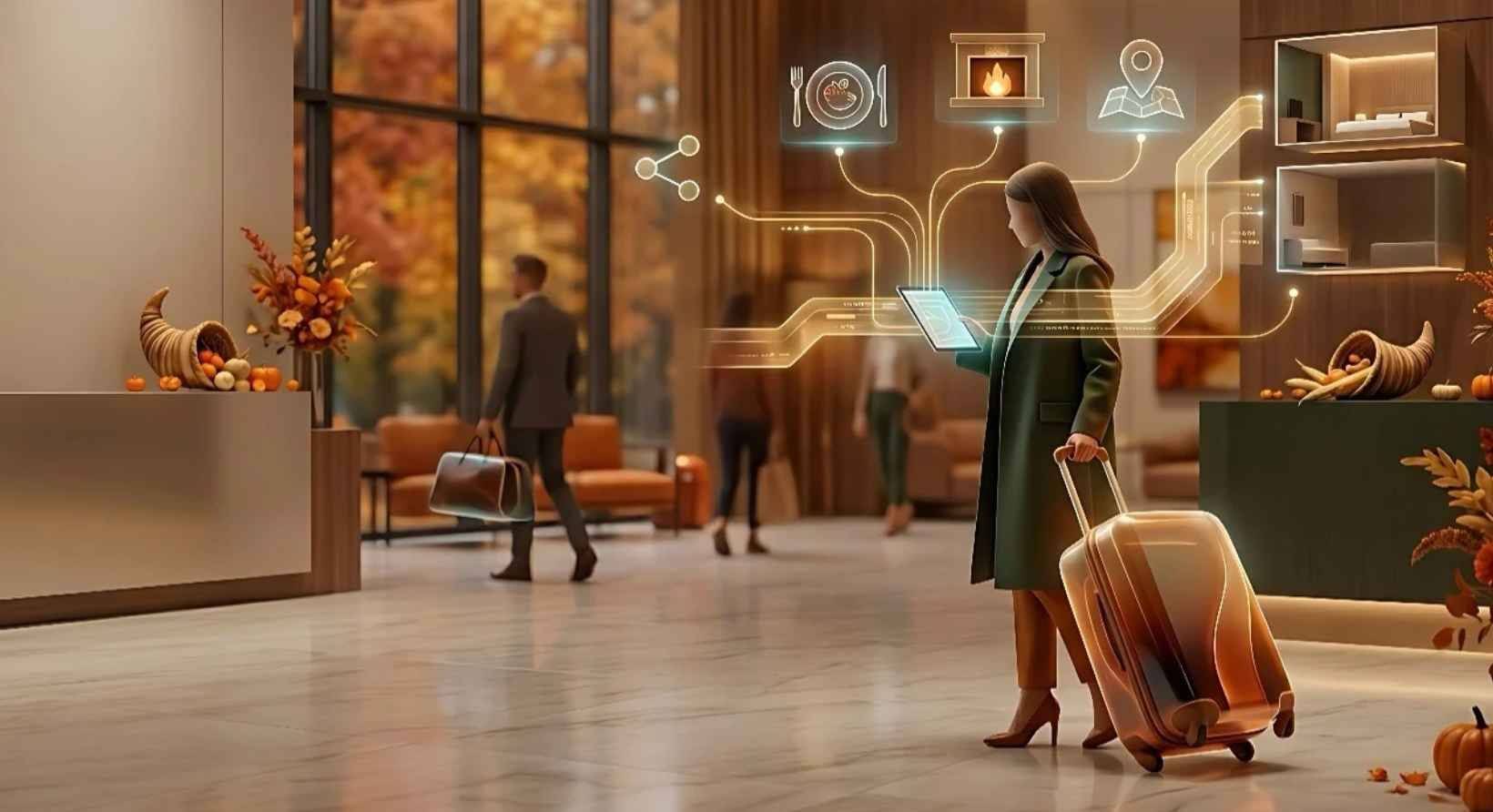
An industry relationship opens the door to real-world AI testing, proving that meaningful hospitality innovation begins with collaboration, trust, and practical experience.
By Kirsten Mosco
Some of the most meaningful advances in hospitality don’t begin with a corporate directive, a multimillion-dollar technology investment, or a formal industry initiative. Sometimes, they begin with a conversation between two professionals who trust each other, understand the challenges facing hoteliers, and share a desire to make the industry better.
That’s the story behind a unique collaboration involving Newport Hospitality Group’s Area Director of Sales & Marketing James Landrum, and Trina Fine, Senior Manager of Innovation & Technology Enablement at Hyatt Hotels Corp. Through their longstanding professional relationship, Landrum and Fine have helped bring Newport into an early-stage effort to test and refine emerging artificial intelligence applications for hotel operations. Working alongside Hyatt’s Corporate AI Operations team, Newport is providing valuable, real-world feedback from its Hyatt Place Blacksburg University in Virginia to help evaluate how new AI tools and training could support hotel associates, improve operational efficiency, and enhance the guest experience.
What makes this collaboration especially noteworthy is how it came together. This was not a corporate mandate or a formal, companywide program. It was an opportunity born from professional relationships, mutual respect, and a willingness to collaborate beyond traditional organizational boundaries. And that may be one of the most important lessons for an industry racing to understand AI’s potential.
Innovation Needs a Reality Check
Artificial intelligence is rapidly changing the hospitality landscape. From guest communications and personalized service to forecasting, inventory management, and workforce development, the possibilities seem endless. Yet a significant gap can exist between what technology promises in a controlled development environment and what it actually delivers inside a busy hotel.
A solution that looks impressive during a demonstration may encounter very different circumstances when introduced to a front desk associate managing multiple arrivals, an engineer responding to an urgent maintenance request, or a department leader balancing staffing levels with fluctuating demand. That’s why collaboration between technology innovators and hotel operators is so important.
Newport’s involvement provides an opportunity to examine AI applications through the lens of the people who will ultimately use them. Rather than waiting for solutions to be finalized and introduced across a portfolio, Newport associates can offer feedback during the development and testing process, helping identify opportunities, limitations, and practical considerations before broader implementation.
The goal isn’t simply to determine whether AI works. It’s to understand whether it makes the work of hospitality easier, more efficient, and more effective. The collaboration is exploring how AI can support several critical areas of hotel operations, including guest experience, associate training, inventory management, and engineering processes. Each represents an opportunity to improve performance but also requires an understanding of how hotels function in the real world.
Consider associate training. AI-powered resources may eventually help employees access information more quickly, reinforce brand standards, and develop confidence in their responsibilities. But those tools must be intuitive, accurate, and relevant to the situations associates encounter throughout their shifts.
In engineering, AI may help teams organize maintenance information, identify recurring issues, or streamline routine processes. In inventory management, it could help operators make more informed decisions about purchasing, availability, and resource allocation.
The potential is considerable. Still, the success of these applications depends on thoughtful testing, honest feedback, and a willingness to refine the technology based on operational experience. By participating in this process, Newport is helping ensure that the people closest to the guest experience have a voice in shaping the tools designed to support them.
The Power of Relationships Beyond Brand Boundaries
Perhaps the most compelling aspect of this collaboration is that it demonstrates how relationships can create opportunities that extend far beyond a single hotel or management company. In this instance, a relationship between Landrum and Fine created a bridge between a brand’s innovation efforts and the operational expertise available within Newport’s organization.
It also demonstrates that productive collaboration doesn’t always have to follow traditional brand or ownership lines. When hospitality professionals recognize a shared challenge, the opportunity to contribute can be more important than the flag flying outside a particular hotel.
For brands, this type of engagement can be invaluable. Early feedback from experienced operators can help identify potential obstacles, validate assumptions, and shape solutions that are more practical for widespread adoption. For management companies, participation provides insight into emerging technologies and an opportunity to influence how those technologies evolve. Most importantly, both sides benefit from a stronger understanding of what hotel associates and guests actually need.
Not every pilot will produce a breakthrough. Some ideas may need significant refinement, while others may prove less useful than initially anticipated. That is precisely why testing matters. When brands and operators collaborate early, they can learn what works, identify what doesn’t, and make better-informed decisions before introducing technology more broadly.
For Newport, the opportunity is about more than gaining early exposure to AI. It reflects a philosophy that innovation should be collaborative, grounded in operational realities, and ultimately focused on people.
The hospitality industry has never lacked creative ideas. Its greatest challenge is often translating those ideas into consistent, meaningful improvements across properties with different staffing models, guest expectations, physical environments, and operational demands.
That translation requires the participation of people who understand the business from the inside.
As AI becomes more deeply embedded in hospitality, the relationships between brands, management companies, technology developers, and frontline associates will become increasingly important. The organizations that make room for honest feedback and shared experimentation will be better positioned to introduce solutions that deliver lasting value.
The collaboration between Newport and Hyatt’s innovation professionals illustrates a simple but powerful principle: Progress happens faster when expertise is shared. And sometimes, the next meaningful advancement in hospitality begins not with a corporate initiative, but with one colleague picking up the phone and asking another, “Would you help us test something?”
ABOUT THE AUTHOR
 Kirsten Mosco is Vice President of Media & Communications at Newport Hospitality Group. Her career has centered on helping hospitality companies define their position, sharpen their message, and connect more effectively with their markets. Before joining Newport, she worked across hotel marketing and agency leadership, partnering with owners, operators, and management companies on branding, communications, and growth initiatives. Kirsten earned a degree in Finance from Florida International University and is a Certified Hospitality Digital Marketer (CHDM).