A Full House Isn’t Always a Full Win: Rethinking Fall Group Revenue
October 13, 2026
Beyond room blocks and ballroom bookings, hotels can turn fall gatherings, holiday celebrations, and existing guest demand into a bigger bottom-line opportunity
By Whitney Altizer
For years, hotel operators have approached fall with a familiar playbook: Fill the guestrooms, secure the group blocks, and finish the year with strong occupancy. It’s a strategy that makes sense, but it also leaves an important question unanswered: Are we maximizing the revenue potential of the business we’ve already captured?
A full hotel doesn’t automatically mean a maximized hotel.
As we move through the final quarter of 2026, I believe some of the most compelling revenue opportunities aren’t necessarily found in booking the next group of 50 or 100 guestrooms. They’re found in taking a closer look at the guests already staying with us, the groups already gathering at our properties, and the spaces and services that could be generating additional revenue.
For hotel operators, that requires a shift in thinking. Instead of measuring success primarily by how many rooms we sell, we need to consider how much total value we’re creating from every guest and every gathering.
The Business Beyond the Room Block
Consider a wedding weekend. Traditionally, a hotel might focus on securing the room block or booking the reception. But the wedding itself is only one piece of a much larger revenue opportunity. There may be a welcome reception on Friday, a rehearsal dinner, upgraded accommodations for the wedding party, a farewell breakfast on Sunday, and smaller gatherings throughout the weekend. Each creates an opportunity to capture incremental revenue while making the experience more convenient for guests.
Even a select-service hotel without a ballroom can participate. Room blocks, extended stays, premium room upgrades, and partnerships with nearby wedding venues can make the property an important part of the celebration.
The same principle applies to corporate groups, association meetings, and social events. A company booking a meeting room may also need guestrooms, audiovisual services, parking, or space for an employee appreciation gathering. The question shouldn’t simply be whether we can accommodate the group. It should be how much of the overall experience we can reasonably and profitably deliver.
This doesn’t mean pushing unnecessary services on customers. It means anticipating their needs and presenting solutions that make their experience easier while increasing the hotel’s share of the business.
Hoteliers invest significantly in their physical spaces, yet many of those spaces remain underutilized for portions of the day or week. A meeting room that sits empty on a Thursday afternoon could host a professional networking event. A restaurant’s private dining area might accommodate a company recognition dinner. An outdoor patio could become a gathering space for a fall celebration. Even a select-service hotel’s meeting room or lobby gathering area may offer opportunities for smaller events.
The challenge is recognizing these spaces as revenue-producing assets rather than simply amenities.
At Newport Hospitality Group, we believe hotels should evaluate what each property can realistically offer and then identify creative ways to bring those offerings to market. For full-service properties, the opportunities may include catering, event services, private gatherings, and expanded use of restaurant and bar spaces. At select-service properties, the strategy may center on small meetings, room upgrades, parking, breakfast purchases, extended stays, and partnerships that add value to the guest experience.
The local community also represents an often-overlooked revenue opportunity. Hotels shouldn’t be viewed exclusively as places for overnight guests. They can become gathering places for nearby residents, whether for a business meeting, family celebration, networking event, or casual get-together. Full-service hotels may attract local traffic through restaurants, bars, and event spaces, while select-service properties can leverage smaller meeting areas, local partnerships, and community activities. The key is giving residents a reason to think of the hotel as a place to gather, not just a place to stay.
Not every hotel needs a ballroom to participate in the group market. And not every revenue opportunity requires a large event. Sometimes, success comes from making better use of what is already there.
The Holiday Party Starts Long Before December
Fall also presents an important opportunity to capture holiday business before the calendar becomes crowded. September and October should be prime selling months for corporate celebrations, employee appreciation events, association gatherings, family parties, and New Year’s Eve business. Waiting until November often means competing for whatever dates and budgets remain.
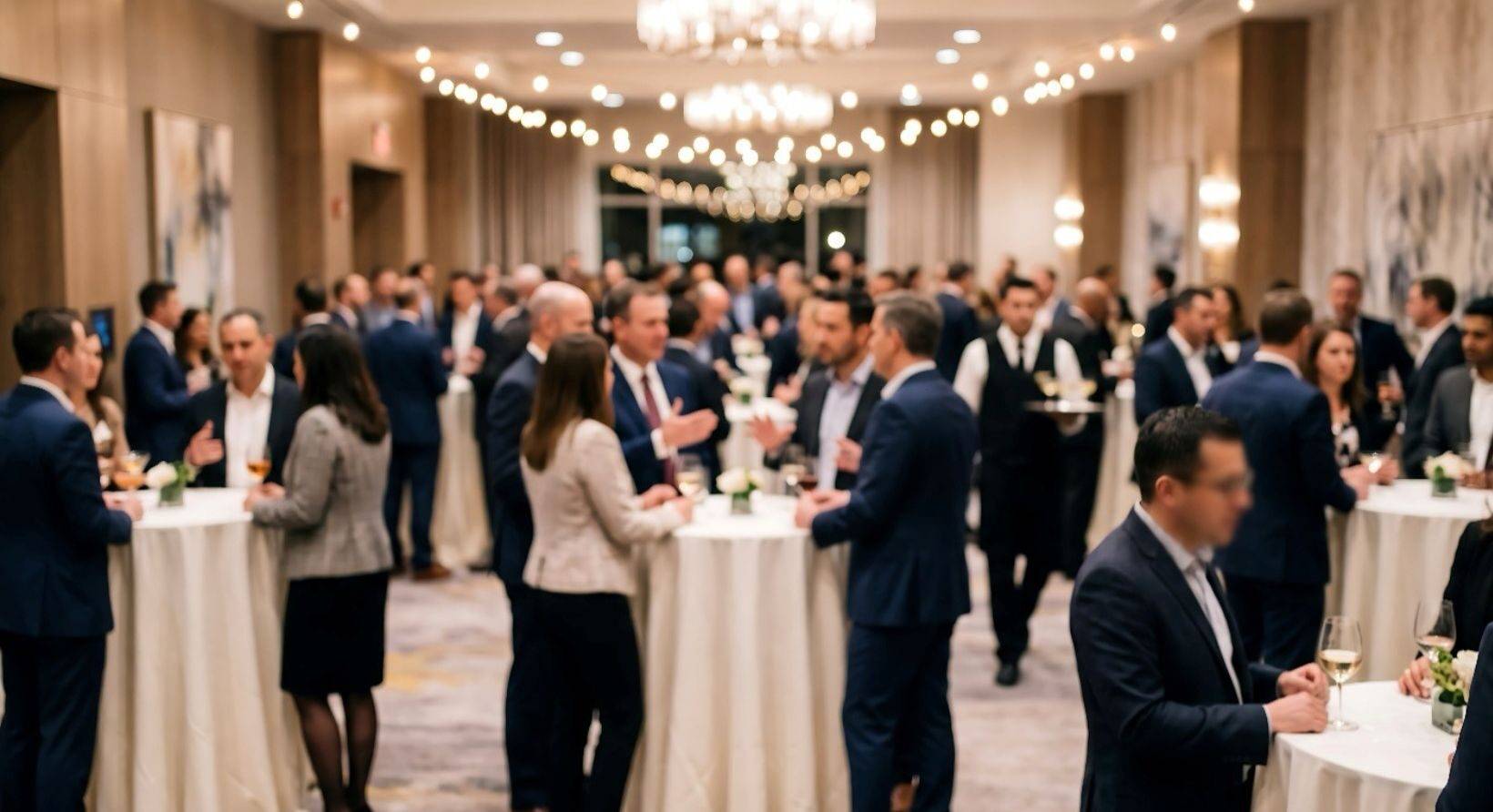
But hoteliers should also recognize that the traditional holiday party is changing. Not every organization wants a large banquet. Some are looking for smaller celebrations, private dinners, cocktail receptions, or informal gatherings that bring employees together without the complexity of a major event. That creates opportunities for hotels to rethink how they package and promote their spaces.
A straightforward holiday gathering package with clearly defined inclusions and flexible options can make the purchasing decision easier. Customers appreciate knowing what they’re getting, what it will cost and how much planning they’ll need to manage themselves.
For select-service hotels, the holiday opportunity may be less about hosting the event and more about accommodating attendees. A company holding its celebration at a nearby venue may need guestrooms for employees traveling from other markets. Families gathering for the holidays may need multiple rooms, extended stays, or convenient lodging near their celebrations. The important thing is to start selling early and look beyond traditional event formats.
One of the easiest ways to attract fall business is to discount guestrooms. But the easiest strategy isn’t always the most profitable. Before reducing rates, hotel operators should consider whether a package or promotion could deliver greater perceived value while protecting room revenue.
For example, a fall weekend package might include parking, breakfast, a late checkout, or access to a nearby attraction. A wedding room block could include an upgraded suite for the couple. A corporate gathering might benefit from bundled meeting space and audiovisual services. These additions can make an offer more attractive without relying exclusively on price.
Of course, packages must be evaluated carefully. An amenity that costs more to provide than the revenue it generates isn’t necessarily a win. That’s why revenue management, sales, and operations need to collaborate on package development. The goal is to create offerings that appeal to customers, fit the property’s capabilities and contribute positively to profitability.
It’s about increasing value rather than simply giving away the room.
It Takes a Group to Attract a Group
Perhaps the biggest opportunity for hotels this fall is breaking down the traditional boundaries between departments. Group revenue cannot be the responsibility of sales alone. Sales may identify an opportunity for a holiday gathering. But revenue management determines the right pricing strategy. Operations evaluates staffing and execution. Food and beverage develops the offering where appropriate. Marketing and digital teams communicate the experience to potential customers.
Each department plays a role, but the customer sees only one hotel.
At Newport, we emphasize a commercial strategy mindset because maximizing revenue requires everyone to look at the property through the same lens. That applies just as much to select-service hotels (where teams may have fewer departments and revenue streams) as it does to larger full-service properties. The objective is to understand the assets, services, and capabilities of each hotel and determine how to make them work together.
When departments operate independently, opportunities can be missed. When they collaborate, a single room block or event can become a more valuable piece of business.
Let Fall Performance Shape 2027
Fall offers more than an opportunity to finish 2026 strongly. It’s a testing ground for new revenue strategies and an opportunity to better understand what each guest is actually worth to the hotel. That means looking beyond occupancy and RevPAR. For full-service hotels, performance may be measured through total revenue per occupied room, F&B spending, restaurant covers, average check, event revenue, and ancillary sales. For select-service properties, the focus may be on upgrades, parking, pet fees, breakfast purchases, extended stays, and package performance.
We also need to understand where our local business is coming from and what actually worked. Did seasonal promotion drive traffic? Did a special event generate incremental revenue? Did a package increase total guest spending? Did a local partnership generate room nights?
These insights should shape commercial planning for 2027. The goal isn’t to replace traditional performance indicators, but to complement them with a broader understanding of profitability and guest value.
As operators, we’re always searching for the next corporate account, group booking or opportunity to fill guestrooms. But perhaps one of the smartest strategies for the remainder of 2026 is to focus more closely on the business we already have.
A full house is certainly worth celebrating. But a hotel that maximizes the value of that full house has an even better reason to celebrate.
ABOUT THE AUTHOR

Whitney Altizer is Senior Vice President, Chief Commercial Officer, for Newport Hospitality Group. She leverages decades of experience in marketing, sales, and revenue management to provide integrated solutions and lead new initiatives. Whitney’s commitment to her craft has her certified through the Hospitality Marketing and Sales Association International (HSMAI) in revenue management, digital marketing, and sales. She travels when not orchestrating ongoing growth for her team or solidifying the company’s financial position. An avid adventurist, she has visited 15 countries with plans to see another 15.